

Regret can mean several different things, and it does not tell you what a particular person will do.
Key takeaways
- Regret about the ending is different from wanting a reunion.
- Silence and social posts do not reveal a reliable motive.
- No timetable predicts a particular ex’s regret.
For the broader topic, see Should You Get Back With Your Ex?.
Regret can mean different things
Someone might regret how they ended the relationship, miss companionship, question the decision, or want to try again. Those are different possibilities. Regret about one part does not prove willingness or ability to rebuild the relationship.
You cannot reliably infer a particular kind of regret from silence, a social-media post or an indirect report. If someone speaks to you directly, listen to what they actually say and look at what they do, rather than treating the word “regret” as an answer to everything.
Why Regret and Return Are Different Questions
A person can miss you genuinely, think about you often, feel that they handled it badly, and still be confident they do not want the relationship back. Those are not contradictions.
This matters because the hoped-for sequence — they regret it, therefore they return, therefore it works — has three separate steps, and each one is less likely than the one before.
What This Does Not Tell You
Nothing on this page tells you what your particular ex is feeling. It cannot. What it can do is stop you reading their silence as proof of one thing or another, because silence is compatible with all of it.
If you are trying to decide whether to reach out, the useful question is not whether they regret it. It is whether anything that ended the relationship has actually changed.
Next, read Waiting For Your Ex To Regret It.
How Coaching Can Help While You Are Waiting to Know
A breakup coach can help with the everyday side of this — for example:
- Separating an apology from a wish to reunite.
- Deciding what a statement of regret would change.
- Avoiding conclusions drawn from indirect signs.
- Choosing the evidence you would need for another conversation.
- Returning attention to your own decisions.
These are examples, not the full scope. Coaching does not provide diagnosis or treatment. See the full scope of breakup coaching.
If you would like to talk this through and choose a practical next step, coaching is one option. Explore breakup coaching
Return to the breakup recovery hub when you want a different starting point.
This article is for general informational purposes only. It does not provide medical, psychological, legal, or financial advice, and it does not replace an individualized assessment by a qualified licensed professional.
Before you start: what's included in coaching · what happens after you sign up · is Ventoutt legit? · Personal data deleted on request — how data deletion works
Mental Health Support
Ready to get real support?
Therapy, coaching, or anonymous venting: find the right fit for you.

Noreen Choudhri
Mental Wellness Coach
10+ Years Experience
Qualifications: M.Phil. in Clinical Psychology, Gold Medalist; M.Sc. in Psychology with specialization in Clinical Psychology
Specializes in: Stress management, Relationship concerns, Positive parenting, Women's well-being, Workplace stress, Self-improvement, Emotional clarity, Personal growth, Family concerns, Confidence building, Coping skills, Behavior modification, CBT-informed support, Supportive guidance, Child and adolescent concerns
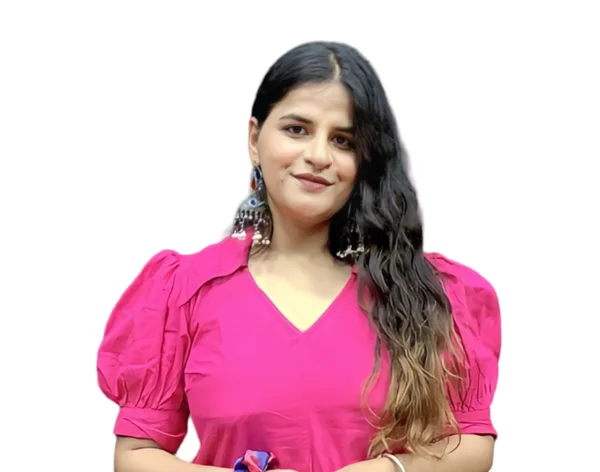
Pulkita Wadhwa
Mental Wellness Coach
USA Fellowship-Trained Support
Qualifications: Master’s in Psychology; Bachelor’s (Hons.) in Psychology; Psychoanalytic Fellowship – Washington-Baltimore, USA; Diplomas (NIMHANS & Child/Family Counselling)
Specializes in: Psychoanalytic, CBT, DBT; Stress, relationships, career, family dynamics
Best for: In-depth coaching, complex emotional patterns, and long-term personal transformation
Global Exposure: Advanced clinical training and academic exposure through her fellowship in the USA
Every coach is screened before working with clients — here’s how Ventoutt screens professionals, and what qualifications to look for in a mental wellness coach.
Matching targeted within 24 hours. Ventoutt assigns your first coach; if the fit isn’t right, you can change coach from the available options. Changing coach is free.
“My ex relationship affected me more than I realised. I became anxious, insecure, and constantly questioned my self-worth, it was very tiring and I was not able to stop myself from calling my ex, but then my coach helped me understand why I felt this way, how the relationship impacted me, and how to slowly set emotional boundaries. Over time, I stopped blaming myself and started feeling confident again, it took some time but it was worth it.”
Evelyn
USA
“I originally started coaching because I could not decide whether to text my ex. Half of me wanted them back and the other half knew there were reasons we broke up. What I liked was that my coach never told me what decision to make. We talked through what I was actually missing and what would realistically need to change. That helped way more than someone just saying ‘move on.’”
Sophia D.
USA
Video experiences
Emma, USA
Duration: 2:20

Adreana, Europe
Duration: 0:58
To protect user privacy, some testimonial images are illustrative and some names have been changed.

Anshika Jain
Mental wellness coach at Ventoutt
Qualification: PhD scholar, M.A. Clinical Psychology, India
Dedicated to bringing you authentic and helpful mental health content.
View Profile
Sakshi Thakar
Mental wellness coach at Ventoutt
Qualification: M.Sc. Clinical Psychology, India
View ProfileLast reviewed: Sep 10, 2026
Last updated: Sep 10, 2026
This article is for general education and emotional wellbeing. It is a complement to, rather than a replacement for, care from a licensed professional. If you are going through a crisis or thinking about harming yourself, please reach out for immediate help: call or text 988 (Suicide & Crisis Lifeline), contact your local emergency services, or explore our crisis helpline resources.