
Ghosting hurts differently because the ending is also an unanswered question. Nothing formally closed, so part of you stays open. Recovery usually starts when you stop making your ability to move forward conditional on an explanation the other person has not chosen to give.
Key takeaways
- A final message is optional.
- Respect no-contact requests and your own safety.
- You can stop participating without receiving an explanation.

For the broader topic, see Situationship Endings.
Why Ambiguity Is Its Own Problem
A clear breakup gives your brain a fact: this is over. Ghosting creates a gap, and the gap fills with alternatives. Maybe they are overwhelmed. Maybe something happened. Maybe they need time. Maybe I said something. Maybe they will come back.
Early uncertainty is reasonable. Indefinite uncertainty is exhausting, because every one of those possibilities has to be held open at once.
Silence Is Information
At some point the absence of a message becomes the message. It does not tell you why, and you may never know why. It does tell you the one thing you can act on: this person is not participating in the connection in any direct or reliable way right now.
That is a fact rather than a guess, and it is enough to make a decision with.
One message is an option, not something you owe
If you want to clarify an ambiguous ending, one brief message can be an option. Do not send it if the other person has requested no contact, blocked contact, or if reaching out is unsafe. You do not need to find another channel around a boundary.
Optional script: “I have not heard from you, and I am not going to keep checking for a reply. I am stepping away from this connection. I wish you well.”
You can choose to step away without sending anything. No reply leaves the explanation uncertain; it does not prevent you from deciding what contact you are available for.
If the ending is already clear and the unanswered question is why it happened, use moving on without closure.
The One-Message Rule
If you have not yet said what you needed to, one clear message is reasonable. Decide before you send it what you will do if there is no reply — because deciding afterward, at the point of no response, is when one message becomes five.
After that, more messages tend to add exposure without adding closure. Not because you should be too proud to reach out, but because the information you are looking for is not going to arrive by text.
Writing Your Own Closure Statement
Closure does not require inventing a motive. Do not conclude they were avoidant, or that they never cared, unless you actually know.
Build it from three parts: what happened, what you know, what you are choosing. “We were seeing each other regularly, then communication stopped without a clear ending. I do not know all the reasons. I am going to treat the lack of contact as information and stop organizing my week around whether they come back.”
Notice what that does not do. It does not decide they were secretly afraid of intimacy, that you were not enough, or that they will definitely be back. Those are stories the mind produces to fill ambiguity, and building closure on them means rebuilding it every time you change your mind about which one is true.
Next, read Explain Situationship Breakup Friends Family.
Closing the Loopholes
A closure statement that leaves the monitoring intact does not hold. Mute or unfollow. Clear them from recent searches. Turn off location sharing. Leave the shared album. Ask one friend not to pass on updates.
Watch where the checking has migrated to. If you stopped messaging but now check their story hourly, watch their follower count, or look at their listening activity, the loop is intact and only the doorway has changed.
If They Come Back
They might, weeks or months later, with something casual. You can make a fresh decision then, with whatever new information they bring.
What you do not have to do is keep the situation emotionally open in the meantime, just in case. Deciding to move forward now does not commit you to refusing a conversation later — it just means the intervening months belong to you rather than to waiting.
How Coaching Can Help After an Ending With No Conversation
A breakup coach can help with the everyday side of this — for example:
- Talking through an ending without a conversation.
- Deciding whether a final message is appropriate.
- Respecting no-contact and safety boundaries.
- Choosing what to do if there is no reply.
- Building your next step from facts rather than guessed motives.
These are examples, not the full scope. Coaching does not provide diagnosis or treatment. See the full scope of breakup coaching.
If you would like to talk this through and choose a practical next step, coaching is one option. Explore breakup coaching
Return to the breakup recovery hub when you want a different starting point.
This article is for general informational purposes only. It does not provide medical, psychological, legal, or financial advice, and it does not replace an individualized assessment by a qualified licensed professional.
Before you start: what's included in coaching · what happens after you sign up · is Ventoutt legit? · Personal data deleted on request — how data deletion works
Mental Health Support
Ready to get real support?
Therapy, coaching, or anonymous venting: find the right fit for you.

Nishi
Mental Wellness Coach
Mental wellness coach
Qualifications: M.Sc. in Clinical Psychology (Neuropsychology); Master’s in Counseling & Behavior Modification
Specializes in: Stress, relationships, LGBTQ+ matters, body image concerns
Best for: Deep emotional issues, and clients looking for a structured approach
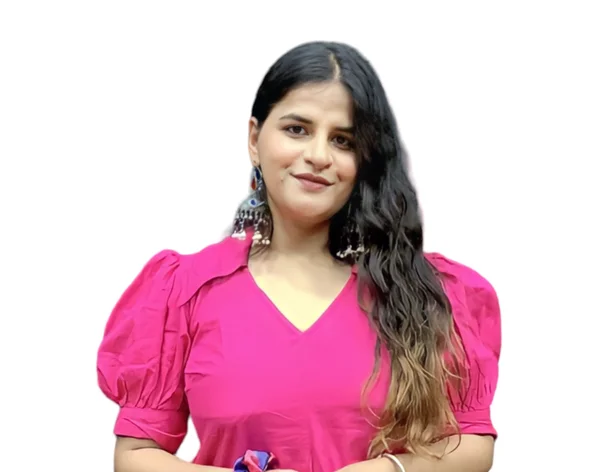
Pulkita Wadhwa
Mental Wellness Coach
USA Fellowship-Trained Support
Qualifications: Master’s in Psychology; Bachelor’s (Hons.) in Psychology; Psychoanalytic Fellowship – Washington-Baltimore, USA; Diplomas (NIMHANS & Child/Family Counselling)
Specializes in: Psychoanalytic, CBT, DBT; Stress, relationships, career, family dynamics
Best for: In-depth coaching, complex emotional patterns, and long-term personal transformation
Global Exposure: Advanced clinical training and academic exposure through her fellowship in the USA
Every coach is screened before working with clients — here’s how Ventoutt screens professionals, and what qualifications to look for in a mental wellness coach.
Matching targeted within 24 hours. Ventoutt assigns your first coach; if the fit isn’t right, you can change coach from the available options. Changing coach is free.
“Soo ventoutt, team asked me to give their honest feedback, soo here it is. I came in feeling emotionally exhausted from work and life because of my boss(still hate her) but now I know how to deal with that. My coach followed my journey, She remembered my triggers, checked in on past conversations, and adjusted sessions as I changed. It felt thoughtful and not rushed. Thankyou Nishi.”
Emily R.
USA
“For months I kept thinking I just needed one more conversation with my ex and then I’d finally have closure. Except every answer just gave me five more questions. Coaching helped me realize I was trying to think my way out of something I actually needed to process. That was probably the biggest shift for me.”
Mia T.
USA
Video experiences

Eva, France
Duration: 2:45

Zara, Australia
Duration: 0:45
To protect user privacy, some testimonial images are illustrative and some names have been changed.
Sakshi Thakar
Mental wellness coach at Ventoutt
Qualification: M.Sc. Clinical Psychology, India
Dedicated to bringing you authentic and helpful mental health content.
View Profile
Anshika Jain
Mental wellness coach at Ventoutt
Qualification: PhD scholar, M.A. Clinical Psychology, India
View ProfileLast updated: Sep 10, 2026
This article is for general education and emotional wellbeing. It is a complement to, rather than a replacement for, care from a licensed professional. If you are going through a crisis or thinking about harming yourself, please reach out for immediate help: call or text 988 (Suicide & Crisis Lifeline), contact your local emergency services, or explore our crisis helpline resources.