
Yes, and it usually starts with trusting yourself rather than with feeling certain about anyone else. You do not need a guarantee that nobody will hurt you again — nobody has one. You need confidence that you will notice what matters, ask directly, hold a boundary, and act on what you see.
Key takeaways
- Separate an old reminder from the facts of the current situation.
- Build trust through proportionate requests and observable behavior.
- You cannot make yourself responsible for preventing every possible harm.

For the broader topic, see Cheating and Betrayal.
Why New Relationships Feel Harder
Betrayal teaches attention to scan. A late reply feels loaded. A new name stands out. A work trip becomes a story before anything has happened.
That does not mean ignoring your instincts. It means separating old evidence from new. Ask what is happening in this relationship now, not only what this reminds you of.
If the worry is about the partner you’re with now, and nothing from the past is behind it, start with how to stop overthinking in a relationship.
Self-Trust First, and What It Actually Means
Not “I will never be fooled again.” That is not available to anyone. Something more modest and more durable: if something concerns me, I can ask. I know what my boundaries are. I will weigh consistent behavior over what someone says once. And if something is repeatedly crossed, I can act instead of talking myself out of what I am seeing.
These are choices you can work on; they cannot guarantee safety or prevent someone else’s harmful behavior. Support from trusted people can matter too.
The Trust Ladder
Trust does not have to be all or nothing. Let it build from evidence.
Low rungs are small and observable: does this person do what they said, communicate when plans change, respect a minor boundary without turning it into an argument. Higher rungs involve some vulnerability: raising a concern, asking a direct question, depending on them slightly and seeing what happens.
“I trust this person to be honest about plans because they have been consistent for three months” is more grounded than either “I trust nobody” or “I have to trust completely or this is doomed.” Provisional and specific is a real position.
Use the ladder on one small situation
Illustrative example: Someone you are newly dating replies later than expected. It reminds you of earlier deception.
| Step | A possible response |
|---|---|
| Name the reminder | “Late replies bring back what happened before.” |
| Identify the present facts | “We did not agree on a reply time. I do not know why they were unavailable.” |
| Make a proportionate request | “If plans change, could you let me know?” |
| Observe what happens | Look at how the person responds and whether agreed plans are respected over time. |
| Respond to new evidence | If there is an actual lie or repeated boundary violation, address that behavior and decide what contact you want. |
You do not need to ignore discomfort, prove trust by sharing everything, or monitor someone to guarantee safety. Trust involves uncertainty. You are not responsible for preventing another person’s deception.
Next, read Process Breakup After Being Cheated On.
When the question is about your current partner, trust issues in a relationship helps separate what happened between you from doubt carried from before.
Why Surveillance Is Not the Answer
After being cheated on it is understandable to want stronger safeguards. Stronger does not have to mean monitoring.
Password checks, location tracking and constant reassurance feel protective and tend to make the new relationship revolve around the old betrayal. They also cannot deliver what they promise — no amount of access produces certainty, and the search for it is unbounded.
A boundary describes what you need and what you will do. Surveillance tries to eliminate uncertainty, which is not achievable in any relationship.
What to Tell Someone New
You do not owe a full history early. Share it when it explains a boundary or a reaction, at a pace that fits how well you know them.
“Something happened in my last relationship that makes me more direct about this than you might expect” is enough context for most situations, and it frames it as information rather than as a warning about you. If the reviewing and comparing itself is the harder part right now, why infidelity breakups feel different covers why that can take longer than expected.
Trusting Your Own Judgment About People Generally
Betrayal often widens beyond the relationship. People report second-guessing friendships, work decisions, and their read of situations that have nothing to do with the ex.
That makes sense. If your assessment was wrong about something that mattered, the assessment itself feels unreliable. But the conclusion does not follow. Being deceived by someone working at deceiving you is not evidence that your judgment is poor; it is evidence that concealment works, which is why people do it.
A more useful test than “can I trust my judgment?” is “what would I do differently if something felt off?” If the answer is that you would ask directly rather than talk yourself out of it, your judgment is not the thing that changed — your response is, and that is an improvement.
What to Do With the Version of You That Trusted Them
People are often harder on their past self than on the person who lied. The openness, the benefit of the doubt, the not-checking — all of it gets recast as naivety.
It is worth being careful with that, because those are the same qualities any close relationship requires. If you conclude that trusting was the mistake, the lesson you take forward is to trust less, which costs you far more than it protects.
The more accurate version is narrower: you trusted someone who was not trustworthy, and you did not have the information that would have told you. Keeping the capacity and improving the response is a better outcome than losing both.
How Coaching Can Help You Trust Your Own Judgment Again
A breakup coach can help with the everyday side of this — for example:
- Separating an old reminder from present facts.
- Choosing a proportionate request for clarity.
- Defining transparency without monitoring.
- Practicing a response to an actual boundary violation.
- Rebuilding confidence without taking responsibility for others’ choices.
These are examples, not the full scope. Coaching does not provide diagnosis or treatment. See the full scope of breakup coaching.
Want to discuss everyday trust and boundaries without treating a feeling as proof? Explore breakup coaching
Return to the breakup recovery hub when you want a different starting point.
This article is for general informational purposes only. It does not provide medical, psychological, legal, or financial advice, and it does not replace an individualized assessment by a qualified licensed professional.
Before you start: what's included in coaching · what happens after you sign up · is Ventoutt legit? · Personal data deleted on request — how data deletion works
Mental Health Support
Ready to get real support?
Therapy, coaching, or anonymous venting: find the right fit for you.
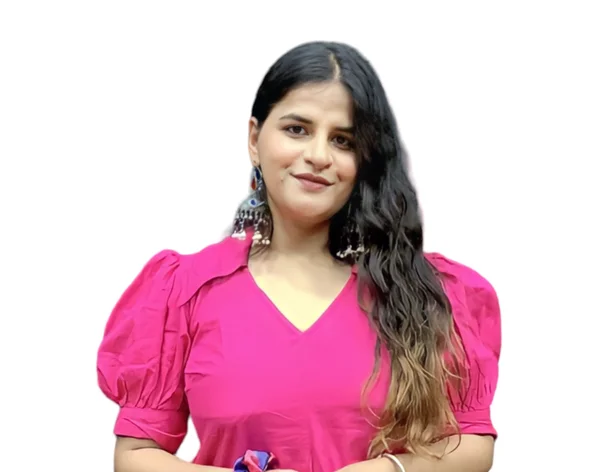
Pulkita Wadhwa
Mental Wellness Coach
USA Fellowship-Trained Support
Qualifications: Master’s in Psychology; Bachelor’s (Hons.) in Psychology; Psychoanalytic Fellowship – Washington-Baltimore, USA; Diplomas (NIMHANS & Child/Family Counselling)
Specializes in: Psychoanalytic, CBT, DBT; Stress, relationships, career, family dynamics
Best for: In-depth coaching, complex emotional patterns, and long-term personal transformation
Global Exposure: Advanced clinical training and academic exposure through her fellowship in the USA

Sakshi Thakar
Mental Wellness Coach
Identity-Affirming Support
Qualifications: B.A. in Psychology; M.Sc. in Clinical Psychology
Specializes in: Trauma-informed care, queer-affirmative, stress, burnout, identity & attachment issues
Best for: Individuals exploring identity, queer concerns, and healing from emotional or relational challenges
Global Exposure: Professional experience working with a USA-based corporate environment
Every coach is screened before working with clients — here’s how Ventoutt screens professionals, and what qualifications to look for in a mental wellness coach.
Matching targeted within 24 hours. Ventoutt assigns your first coach; if the fit isn’t right, you can change coach from the available options. Changing coach is free.
“My ex relationship affected me more than I realised. I became anxious, insecure, and constantly questioned my self-worth, it was very tiring and I was not able to stop myself from calling my ex, but then my coach helped me understand why I felt this way, how the relationship impacted me, and how to slowly set emotional boundaries. Over time, I stopped blaming myself and started feeling confident again, it took some time but it was worth it.”
Evelyn
USA
“The biggest thing I struggled with after my breakup was trusting myself again. I kept thinking, how did I not see this? Why did I stay? What if I make the same mistake again? My coach helped me stop treating every decision I made in that relationship like proof that I have bad judgment.”
Ava J.
USA
Video experiences

Zion, USA
Duration: 2:15

Destiny, USA
Duration: 2:08
To protect user privacy, some testimonial images are illustrative and some names have been changed.
Sakshi Thakar
Mental wellness coach at Ventoutt
Qualification: M.Sc. Clinical Psychology, India
Dedicated to bringing you authentic and helpful mental health content.
View Profile
Anshika Jain
Mental wellness coach at Ventoutt
Qualification: PhD scholar, M.A. Clinical Psychology, India
View ProfileLast updated: Sep 10, 2026
This article is for general education and emotional wellbeing. It is a complement to, rather than a replacement for, care from a licensed professional.
If you need help now
If you are in the US and having thoughts of suicide or self-harm, or need crisis support, call or text 988 or use 988 online chat. For an immediate life-threatening emergency, call 911. Outside the US, contact your local emergency or crisis service. Coaching, venting and a therapy waitlist are not emergency services.
See suicide prevention helplines for your countryIf fear, threats or control are part of the relationship
You do not need to negotiate reunion, contact or friendship when doing so feels unsafe. Consider specialist support for your circumstances. In the US, the National Domestic Violence Hotline offers phone and chat support; call 800-799-7233 or text START to 88788. If device use may be monitored, consider a safer device or a safe way to contact support. Call 911 for immediate danger.
See the National Domestic Violence Hotline and other dedicated resources