

Confidence is trusting what you can do; arrogance is needing others to see you as above them. To stay on the confident side, say good things about yourself plainly, stay curious about what you don't know, and leave room for other people's wins. If you're worried about seeming arrogant, that worry already shows you care how others feel.
Key takeaways
- The line between confidence and arrogance is less about how sure you sound and more about how you treat other people: confidence leaves room for them, arrogance takes it.
- Saying a good thing plainly works better than disguising it: in a set of experiments, people who humblebragged were liked less than people who simply bragged.
- People sharing their own good news overestimated how happy it would make others, so a little context and a question back go a long way.
Written bySakshi Thakar, M.Sc. Clinical Psychology · Coach at Ventoutt·Published Nov 22, 2026 · Updated Nov 22, 2026·Editorial policy
What's the difference between confidence and arrogance?
| Situation | Confident | Arrogant |
|---|---|---|
| You're good at something | You say so when it's relevant, and let your work show it | You bring it up whether or not anyone asked |
| You're wrong | "Good point, I missed that." | You explain why it doesn't count |
| Someone else does well | You're glad, and you say so | You compare, or change the subject to yourself |
| You get feedback | You listen, then decide what to keep | You defend before you've heard all of it |
| A conversation | You speak, then listen | You wait for your turn to speak again |
| You don't know something | "I don't know; I'll find out." | You guess with certainty |
Confidence here means trust in what you can do; how confidence differs from self-esteem and self-worth explains the three words.
Why does the fear of seeming arrogant hold people back?
If you grew up hearing "don't show off" or "who do you think you are?", or in a family where praising yourself was rude, plain confidence can feel like breaking a rule. One comment from a friend years ago ("you're so full of yourself") can stay with you long after they've forgotten it.
So you shrink things: you call a hard-won result luck, stay quiet when you know the answer, let someone else present the idea that was yours. That keeps you safe from the label, and it also keeps you from the practice that builds confidence in the first place.
The way through isn't to stop caring how you come across. It's to learn what plain confidence sounds like, try it in small doses, and see what happens. How to build confidence has a practice plan for one situation at a time. Holding back like this is the "showing up" area of the guide to confidence and self-worth.
How can you talk about your achievements without bragging?
Two lines of research help here.
Disguising a brag backfires. In a set of nine studies published in 2018, researchers compared humblebrags ("so exhausted from all these job offers") with straightforward brags and complaints. Humblebraggers were liked less and seen as less sincere than people who simply bragged. In one field test, a student asked 113 classmates to sign a petition: more than 85% signed after a plain brag, compared with 65% after a humblebrag.
People sharing good news misjudge the room. In three experiments published in 2015, people promoting themselves overestimated how happy their news would make others and underestimated the negative feelings it would stir. Those on the receiving end of heavy self-promotion rated the person as less likable.
Put together: say it plainly, keep it short, and remember the other person has their own week going on.
| Instead of | Try |
|---|---|
| "Ugh, three interviews this week, being in demand is exhausting." | "I've got an offer I'm really happy about. The prep paid off." |
| "Oh, it was nothing, I just got lucky." | "Thanks. I worked hard on that." |
| "Honestly, nobody on the team does this better than me." | "This is a part I'm good at. Happy to help with it." |
| (Silence while someone else presents your idea) | "Glad that's going ahead. It came out of the draft I shared on Monday." |
A simple shape for any win: the fact, one line of context or credit, then a question back ("How's your week been?").
The same moment, three ways (made up). Someone asks how your semester went, and you made the dean's list.
- Hiding it: "Oh, fine. Nothing special."
- Stating it, with credit: "Really well, actually. I made the dean's list, and my study group helped a lot."
- Putting others down: "Great. Unlike half my major, I actually study."
The middle one is confidence: accurate about you, fair to everyone else. If talking about your work in reviews or meetings is the hard part, self-doubt at work covers that side.
How do you hold your ground without talking over people?
Confidence doesn't mean winning every point. It means you can say what you think and still hear the other side.
- Say your view once, clearly. "I see it differently: I think we should wait a week."
- Give one reason, not five. A pile of reasons sounds like a closing argument.
- Ask a real question. "What am I missing?" and then listen to the answer.
- Change your mind out loud when you hear a good reason. "That's fair. Let's do it your way." This is one of the clearest signs of confidence, because it only works if your worth doesn't ride on being right.
If the hard part is saying it at all, without going quiet or giving in, assertive vs. aggressive sets out the difference.
What should you do if someone says you're arrogant?
Treat it as information, not a verdict. Three questions help:
- Is it one comment or a pattern? One remark from one person after one meeting is worth thinking about, not rebuilding yourself around.
- What exactly did they see? Ask for an example: "Can you tell me what I said that came across that way?" A specific answer gives you something to adjust; a vague one tells you less.
- Who is saying it? Some people read any confidence as showing off, especially if they're used to you staying small.
If someone in your life calls you arrogant, "too much" or "full of yourself" whenever you speak up, and you feel smaller around them as a rule, read is it your self-worth, or how someone treats you?.
What if the worry goes deeper than how you come across?
If low self-worth comes with low mood most days, or it's getting in the way of sleep, eating, classes or work, read when low self-esteem needs a therapist. If someone in your life keeps putting you down, controlling you or making you afraid, read is it your self-worth, or how someone treats you?. If you're thinking about ending your life, or you're in danger now, use the crisis options below.
If you need help now
If you are in the US and having thoughts of suicide or self-harm, or need crisis support, call or text 988 or use 988 online chat. For an immediate life-threatening emergency, call 911. Outside the US, contact your local emergency or crisis service. Coaching, venting and a therapy waitlist are not emergency services.
See suicide prevention helplines for your countryCan you practice confidence with a coach?
You can, and people bring things like:
- Talking about an achievement without shrinking it or overselling it
- Getting ready for a moment that needs self-promotion, like an interview or a scholarship application
- Speaking up in a group without worrying about taking over
- A family member who calls confidence "showing off"
- Disagreeing without backing down or digging in
...and plenty that does not fit a category. If it is taking up your week, it is worth a conversation.
Coaching does not diagnose or treat. If you need clinical care, we will help you find it.
See what confidence and self-worth coaching covers
“To be real, I almost tried it randomly after seeing someone mention Ventoutt on Reddit, so I was like, let's give it a try since I was going through an overwhelming phase, its not like everything is sorted now me and my coach, we both are figuring it out and I can see some good changes in myself, maybe because she created a safe, supportive space where I could talk openly and make sense of my emotions. I don't know what else to say.”
Aaliyah
USA

Destiny, USA
Duration: 2:08
“I'll be honest, I expected less because of the pricing. But the sessions were structured, personal, and emotionally safe. In the start I chose chat sessions, but as I gained more confidence, I gradually switched to video.”
Rachel B.
USA

Rachel, USA
Duration: 2:15
To protect user privacy, some testimonial images are illustrative and some names have been changed.
Who could you practice with?
Ventoutt assigns your first coach; if the fit isn't right, you can change coach from the available options. You can try out a plain "I did well" with a coach and get honest feedback; this explains what professional boundaries look like in coaching.

Sparshika Khobragade
Mental Wellness Coach
USA Stress Support Experience
Qualifications: M.Sc. in Clinical Psychology
Specializes in: CBT, mindfulness-based coaching, body image concerns, relationship issues, career transitions, stress management, and personal growth
Best for: stress, a first job, a move or graduation, and people who want a structured, warm approach
Global Exposure: Experience working with clients from the USA
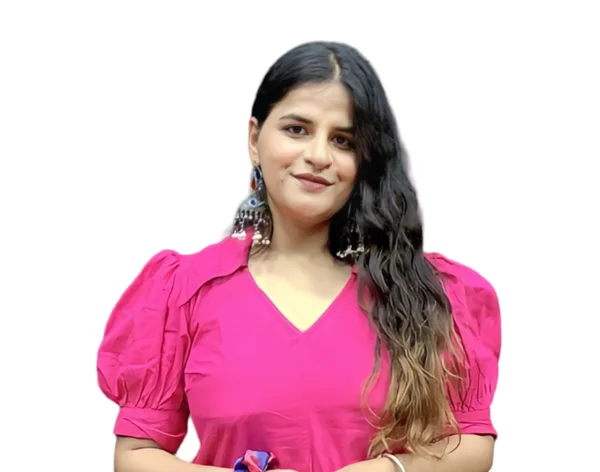
Pulkita Wadhwa
Mental Wellness Coach
USA Fellowship-Trained Support
Qualifications: Master’s in Psychology; Bachelor’s (Hons.) in Psychology; Psychoanalytic Fellowship – Washington-Baltimore, USA; Diplomas (NIMHANS & Child/Family Counselling)
Specializes in: Psychoanalytic, CBT, DBT; Stress, relationships, career, family dynamics
Best for: In-depth coaching, complex emotional patterns, and long-term personal transformation
Global Exposure: Advanced clinical training and academic exposure through her fellowship in the USA

Muskan Kataria
Mental Wellness Coach
Experienced with US clients
Qualifications: M.A. in Clinical Psychology
Specializes in: Cognitive Behavioral Therapy (CBT), Solution-Focused Therapy, emotional support for teens & young adults
Best for: First-time coaching seekers and young individuals looking for guidance and clarity
Global Exposure: Has worked with clients from the USA
Want to sound surer without sounding like someone else?
A coach can help you find words for your wins that feel honest, and practice them before the moment comes. It's mental wellness coaching for everyday confidence and self-worth; a diagnosis isn't part of it.
Ventoutt's coaches are MA/PhD psychology professionals, minimum three years' experience, based in India. Does a coach there know how self-promotion works in a US interview or performance review? Read how coaching from India fits a US schedule and workplace.
$35 single session with no subscription. First 50 coaching texts free for eligible new users. Changing coach is free.


What else do people wonder about confidence and arrogance?
Is confidence the same as arrogance?
No. Confidence is trust in what you can do; arrogance is needing to be seen as better than others. The side-by-side table shows how each one behaves.
Why do confident people get called arrogant?
It can come from how something was said, and it can come from the listener. Someone used to you staying quiet may read plain speech as showing off. Asking for a specific example helps tell which.
How do I accept a compliment without sounding arrogant?
Say "thank you" and stop there, or add one line of credit to someone who helped. Arguing with the compliment isn't modesty; it asks the other person to compliment you again.
What is the opposite of arrogance?
Humility: seeing yourself accurately and staying open to learning. It isn't putting yourself down, and it sits comfortably alongside confidence. How to build confidence shows how to grow it in small steps.
Which studies are mentioned here?
- Sezer, O., Gino, F., & Norton, M. I. (2018). Humblebragging: A distinct—and ineffective—self-presentation strategy. Journal of Personality and Social Psychology, 114(1), 52–74. doi:10.1037/pspi0000108.
- Scopelliti, I., Loewenstein, G., & Vosgerau, J. (2015). You call it "self-exuberance"; I call it "bragging": Miscalibrated predictions of emotional responses to self-promotion. Psychological Science, 26(6), 903–914. doi:10.1177/0956797615573516.
Sakshi Thakar
Mental wellness coach at Ventoutt
Qualification: M.Sc. Clinical Psychology, India
Dedicated to bringing you authentic and helpful mental health content.
View Profile