

There's no right number of calls in a long-distance relationship. Start from the hours you're both awake and free, not from a number. A routine that holds has three layers: a short check-in you can manage on a bad day, a longer call you both protect, and an agreed meaning for days with neither.
Key takeaways
- No number of calls is the right one; what matters is that the routine fits the hours the two of you share, and that neither of you is left guessing.
- Three layers make a routine: a short check-in, a longer call you both protect, and a plain understanding about days when you don't talk; redo it when a new semester or a new work schedule moves your hours.
- If calls are used to keep an eye on you, or missing one gets you accused or punished, start with the section on when it isn't about staying in touch.
Written bySakshi Thakar, M.Sc. Clinical Psychology · Relationship coach at Ventoutt·Published Oct 13, 2026 · Updated Oct 13, 2026·Editorial policy
In this article: How often · Finding the hours · A routine in three layers · When calls feel like a chore · When schedules change · When it isn't about contact · Questions
How often should long-distance couples talk?
As much as fits both of your lives, and no page can turn that into a number. One couple talks for an hour every night and another has two long calls a week; either can work, and either can stop working when a schedule changes. Four things set the amount for the two of you:
- The time difference. Three hours apart, your free evening is their dinner or their bedtime.
- Your schedules. Classes, labs, shift work, a commute.
- How each of you recharges. For one of you a call is rest; for the other it takes energy, even when it's a call they want.
- How you each like to talk. Voice, video, text, or doing something side by side with the call running.
A routine exists to take the guessing out. When you both know when the next call is, a quiet afternoon is only a quiet afternoon.
One check before the method. A routine is something two people build and either can change. If you stay on a call or on camera because of what hanging up would bring, whatever reason you're given for it, or you pick up every time because of what a missed call brings, that isn't a routine: go to when it isn't about staying in touch.
How do you find time across time zones and schedules?
Put both days on one clock. Each of you fills in your own column, in a single time zone, and marks the hours you're awake and free; “busy” needs no detail. The hours that overlap are the only ones a routine can use, and seeing them written down can end the argument about who isn't making time.
For two people three hours apart, it can come out like this:
| Window | On the East Coast | On the West Coast | Good for |
|---|---|---|---|
| Morning | Coffee before work, around nine | Just waking, around six | A voice message, not a call |
| Midday | A late lunch | A mid-morning break | A short check-in |
| Evening | After dinner, winding down | Late afternoon, between class and work | Messages, or a short call if the West Coast side can step away |
| Late evening | The last hour before bed | Early evening, after dinner | The longer call: the hour you're both free |
| Late | Asleep | A free evening | Nothing live. A message to wake up to |
| Weekend mornings | Late morning | Just after breakfast | A long call with no clock on it |
Three cases the table doesn't cover:
- Night shifts. When one of you sleeps through the day, look at the hour after the shift ends. It may be the other's breakfast.
- Exam weeks. Settle on a lighter version ahead of time — the short check-in only — so that it doesn't feel like a withdrawal when it comes.
- A new semester, or a clock change abroad. Redo the two columns. Last term's windows may be gone. With one person abroad, the clocks may not change on the same weekend in both places.
What does a contact routine look like?
This works with a partner who can take “not tonight” and offer another time. If asking to move or skip a call gets you accused or punished, go to when it isn't about staying in touch. Disappointment about a missed call, said plainly, isn't that.
Three layers, each sized by the two of you:
- A short check-in. Small enough to be easy on a full day, and fine to skip: a voice message on the way to class, a photo of lunch, two lines before bed. Its job is to say “thinking of you,” not to carry news.
- A longer call you both protect. As many as your week allows, in a window from your two columns. This is where the real talking goes, and it can be moved when one of you needs that.
- The days with neither. Decide in advance what a silent day means, so that neither of you has to guess: “If I go quiet on a Thursday, I'm in the lab until late. Friday morning I'm back.”
The wording for an understanding like the third one is worked through in how much texting is normal, and how to agree on what works; it applies across a distance too.
Then add what makes the distance feel smaller with no schedule at all: the same show watched on two couches, a game you both play, the song that was on in the store. None of it has to be daily.
What if calls start to feel like an obligation?
If what you dread isn't the call but what follows a missed one, go to when it isn't about staying in touch.
It happens to routines that were built for a different month. A call that feels like a chore doesn't have to say anything about the relationship; the call may be the wrong length, at the wrong hour, or in the wrong format. Four things to try:
- Shorten it. Fifteen good minutes in place of an hour with half your attention.
- Change the format. Cook, fold laundry or study with the call running. Not every call needs a topic.
- Move it. A call set for the end of your day gets what's left of you. Try the start of the day, or a weekend morning.
- Skip one on purpose, with a new time attached, so that it isn't a no-show.
Say it before it shows: “I love talking to you, and weeknight calls are wearing me out. I need to keep weeknights short. Can Sunday be the long one?” A change you announce is kinder than a call you start missing.
If you're on the other end of that sentence, take it as it was said: a request about the calls. Ask what would work, and say which part you'd miss.
If a shorter call or a skipped one sets off worry about what it means, that is a different page: what to do when distance makes you overthink.
How do you keep a routine going when schedules change?
Treat the routine as a draft. A new semester, a new job or a move to another time zone can each break it with no one having done anything wrong.
When that happens, redo the two columns and ask two questions: which layer has stopped working, and what would each of you swap it for?
The bigger plan — visits, and when the distance ends — is in how to make a long-distance relationship work.
And if the calls are fine and something else feels off, the guide to relationship problems can help you name it.
When is it not about staying in touch?
When contact has become a way of watching. If you stay on a call or on camera because of what hanging up would bring — whatever reason you're given — if you're expected to pick up at any hour, if a missed call gets you accused or punished, or if you feel afraid of your partner, or pressured or controlled by them, a routine won't change that: read how to tell a relationship problem from controlling behavior. If you're the one doing the insisting and you'd like to stop, that page has a short answer for you as well, and names a service that talks with people in your position. If it's only the hour of the calls that costs you sleep, that is a scheduling problem: move the call, and if you aren't free to move it, the lines above apply. But if worry about contact — waiting for it, or dreading it — is getting in the way of sleep, classes or work, that is something for a licensed professional, and when worry about your relationship starts taking over names the places to turn.
If you need help now
If you are in the US and having thoughts of suicide or self-harm, or need crisis support, call or text 988 or use 988 online chat. For an immediate life-threatening emergency, call 911. Outside the US, contact your local emergency or crisis service. Coaching, venting and a therapy waitlist are not emergency services.
See suicide prevention helplines for your countryWhere could a coach come in on staying in touch?
If contact isn't being used to watch either of you, the worry about the relationship isn't getting in the way of sleep, classes or work, and the trouble is hours that don't line up, a coach can help with:
- Being heard on how lonely the gaps get, without being told to call more.
- Mapping your two days onto one clock and finding the windows.
- Working out which layer matters to you and which you could let go.
- Wording the request to shorten or move a call so that it doesn't sound like pulling away.
- Deciding what you'd want a silent day to mean.
This is only part of what relationship coaching covers.
Coaching does not diagnose or treat. If you need clinical care, we will help you find it.
Who could help you put a routine together?
Each coach below lists relationships among their focus areas. Ventoutt assigns your first coach; if the fit isn't right, you can change coach from the available options.

Nishi
Mental Wellness Coach
Mental wellness coach
Qualifications: M.Sc. in Clinical Psychology (Neuropsychology); Master’s in Counseling & Behavior Modification
Specializes in: Stress, relationships, LGBTQ+ matters, body image concerns
Best for: Deep emotional issues, and clients looking for a structured approach

Sakshi Thakar
Mental Wellness Coach
Identity-Affirming Support
Qualifications: B.A. in Psychology; M.Sc. in Clinical Psychology
Specializes in: Trauma-informed care, queer-affirmative, stress, burnout, identity & attachment issues
Best for: Individuals exploring identity, queer concerns, and healing from emotional or relational challenges
Global Exposure: Professional experience working with a USA-based corporate environment

Pulkita Wadhwa
Mental Wellness Coach
USA Fellowship-Trained Support
Qualifications: Master’s in Psychology; Bachelor’s (Hons.) in Psychology; Psychoanalytic Fellowship – Washington-Baltimore, USA; Diplomas (NIMHANS & Child/Family Counselling)
Specializes in: Psychoanalytic, CBT, DBT; Stress, relationships, career, family dynamics
Best for: In-depth coaching, complex emotional patterns, and long-term personal transformation
Global Exposure: Advanced clinical training and academic exposure through her fellowship in the USA
Every coach is screened before working with clients — here's how Ventoutt screens professionals, and what qualifications to look for in a mental wellness coach.
Matching targeted within 24 hours. Ventoutt assigns your first coach; if the fit isn't right, you can change coach from the available options. Changing coach is free. See how matching works and when changing coach makes sense.
Want to plan the routine with someone first?
When contact isn't being used to watch either of you and the gaps aren't getting in the way of sleep, classes or work, hours that don't line up are an ordinary long-distance problem — the sort that Ventoutt's mental wellness coaching for everyday issues exists for. A coach's part is helping you name what you need from contact, and the words to ask for it. A coach won't tell you how often a couple ought to talk. Sessions are one-to-one: one person per session.
Ventoutt's coaches are MA/PhD psychology professionals, minimum three years' experience, based in India. Here's how to tell whether a coach is the right one for you.
If your relationship already runs on messages, some of the coaching can too. A monthly plan on Ventoutt includes 24/7 connectivity, so you can message your coach any time; they reply as soon as they can, generally within 24 hours. Replies aren't instant, and messaging isn't part of a single session: here's what ongoing text support with a coach includes, and what it doesn't.
$35 single session with no subscription. First 50 coaching texts free for eligible new users. See what coaching on Ventoutt includes.


Want to make one request smaller first?
The 5-Day Relationship Reset is sent over five days, a short email each day. Email three has you picture an improvement small enough to see on an ordinary day — for a couple in two time zones, that might be one call that starts when it was meant to. Use an email address that only you open. Up to three shorter notes about coaching follow, then it stops.
No relationship details required — just your email.
What people say about Ventoutt
These are individual experiences, not a promise of a particular result.
“I started keeping little notes during the week so I wouldn't forget what I wanted to bring up. It sounds simple, but it helped me come into the next session knowing what I actually wanted to talk about.”
Video experiences — general Ventoutt experiences

Zara, Australia
Duration: 0:45

Rachel, USA
Duration: 2:15
To protect user privacy, some testimonial images are illustrative and some names have been changed.
What do people ask about staying in touch long-distance?
Is it okay not to talk every day in a long-distance relationship?
Yes. Daily contact is something either of you can ask for; it isn't owed. Across a time difference, a call every day can leave the same person staying up each night, so some couples trade it for a daily message and fewer, longer calls. Whichever you choose, say it out loud: trouble can start when one person expects daily contact and the other doesn't know it.
How do you handle a big time difference in a relationship?
Put both days on one clock and find the hours you share; there may be only one or two. Give those to the longer call, and let the rest be messages each of you reads on waking. Trade off who takes the awkward hour, so that it isn't the same person every time.
What do you talk about on long-distance calls when nothing is new?
You don't have to bring news. Do something with the call running — cook, walk, watch the same episode — or ask a question that isn't about the day: what they're looking forward to, what has been on their mind. Short and easy is fine.
What happens when one person wants more calls than the other?
Ask what the extra calls would give the person asking for them: company, feeling included, or knowing that things are okay. Then look for something that gives the same thing and that the other can keep up without dreading it — a voice message in the morning, or a longer call on the weekend. If more calls are required of you and not asked for, go to when it isn't about staying in touch.
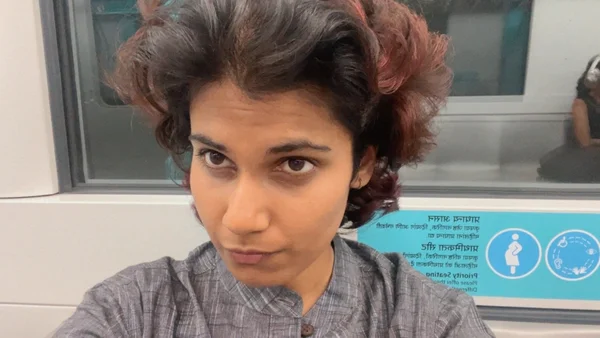
Sakshi Thakar
Mental wellness coach at Ventoutt
Qualification: M.Sc. Clinical Psychology, India
Dedicated to bringing you authentic and helpful mental health content.
View Profile