

To ask for a mental health day, check how your workplace handles sick and personal time, then ask the way you'd ask for any day off, as early as you can. Share as much or as little as you like, as long as it's true. Hand off anything urgent, switch off, and spend the day resting, not catching up.
Key takeaways
- "I'm taking a personal day" and "I'm taking a mental health day" are both honest. You choose how much to share.
- The day does more with a handoff before it and a plan for staying off work during it.
- If the heaviness is back by lunch on your first day back, the day off alone may not be enough; something about the work may need to change too.
Written byAditi Bajpai, M.A. Clinical Psychology · Coach at Ventoutt·Published Dec 13, 2026 · Updated Dec 13, 2026·Editorial policy
What should you check before you ask for a mental health day?
Your handbook or HR portal answers the practical questions:
- What kinds of time off there are: sick time, personal days, PTO, or one bank for all of it
- How much notice to give, and whether a same-day call-out works differently
- Who you tell, and how: a call, a text, the scheduling app or an email
- Whether anything extra is asked for, such as a note for a longer absence
What you're entitled to, and what the law says where you work, is beyond this guide. HR can explain your employer's policy, and your state's labor department can answer questions about the rules where you live.
How do you word the request for a mental health day?
Pick the level of detail you're comfortable with. Five ways to ask, from sharing nothing to naming it:
| How much you share | What it can sound like | When it fits |
|---|---|---|
| Nothing about why | "I'd like to take a personal day this Thursday. The client notes will be in the shared folder by Wednesday night." | Your workplace doesn't ask for a reason for personal or vacation days |
| That you're unwell | "I'm not well and won't make it in today. Dana knows where the Lopez order stands." | Your sick time covers mental as well as physical health; the handbook's wording will say |
| The words "mental health" | "I'm taking a mental health day today. I'm back tomorrow, and Priya is covering anything urgent." | Your team talks about this openly, and saying it feels okay to you |
| A reset, planned ahead | "Could I take Friday the 14th off? It's been a heavy stretch and I'd like a day to recharge. The report will be in by Thursday." | You can see it coming: after a launch, a busy season or a run of doubles |
| A shift you can't work | "I can't work my shift today. I've posted it on the swap board and messaged Marco to see if he can take it." | Hourly work with a swap board or a call-out line; follow its steps first |
Whichever you choose, say when you'll be back and who has anything urgent. There's no need for a made-up illness, and a cover story is one more thing to keep straight when you return.
Should you say "mental health" when you ask for the day?
Only if you want to. Things worth weighing: how your manager reacted when someone else mentioned it, whether people at your work talk about it, and how you'd feel if it came up again later. Naming it can make a later conversation about workload easier to start. Leaving it out is just as honest, as long as what you do say is true.
If someone asks for more than you want to give, one short line is enough: "I'd rather keep the details to myself, but I'll be back tomorrow and up to speed." Covering your work for a day doesn't require anyone to know why.
Why do you feel bad about taking a mental health day?
Because there's nothing to show for it. A fever or a cast explains itself; being worn down doesn't, so the day can feel like skipping out. The work doesn't pause either, and you can picture who'll be picking it up. But being worn down shows up at work anyway, as slower work, more slips and a shorter fuse. A day off before it gets there is part of doing the job, not a break from it.
If guilt shows up whenever you protect your time, not just today, boundaries at work has a section on that.
What should you do before your mental health day starts?
Three small things:
- Send one handoff message. What's urgent, where it lives, and who's covering: "Two things for today: the vendor call at 2 has moved to Monday, and the draft is in the team folder if anyone needs it."
- Set an out-of-office or a status. "Out today, back Friday. For anything urgent, contact Lena."
- Decide how you'll stay off work. Notifications off for work email and chat, the laptop in a drawer, or the work app signed out until tomorrow.
If you're hourly, do the call-out steps first; the message to your coworkers can come after.
How should you spend a mental health day?
On what refills you, not on a backlog. There's no right way, but a day that helps has three parts:
- Rest first. Sleep in, or start slowly. Skip the alarm you'd set for work.
- Something that's yours. A walk, a meal out, a film, an hour with someone you like. One thing you'd look forward to, not a chore you've been putting off.
- Ten quiet minutes on what's been draining you. Near the end of the day, write one line: what's made this stretch so heavy, and one thing you'd change.
What undoes the day: checking messages "just once", catching up on work to get ahead, or filling it with errands until it's as tiring as a shift. One errand is fine. A to-do list isn't the point.
How long does the lift from time off last?
Research on vacations gives part of the answer; none of it tested a single day. A 2023 review pooled 13 studies of vacations lasting 4 to 23 days, 1,428 people in all: well-being rose during the time away and was back to its earlier level after the first week back (Speth, Wendsche & Wegge, 2023). A 2025 review of 32 studies found the benefits lasted longer than earlier work suggested, that longer vacations brought bigger benefits once people were back, and that people who switched off from work while away gained more than those who didn't (Grant, Buchanan & Shockley, 2025). So a day off is worth taking for the rest and the room to think, but it won't change the source of the stress on its own. Pair it with one change to the job you're going back to.
How do you go back to work after a mental health day?
Without a long explanation. Thank whoever covered, in a line. Sort the inbox for what's urgent before you answer anything. If someone asks how you are, "Thanks, I'm glad I took it" covers it. Then take the line you wrote and act on one small part of it: one meeting declined, one task handed back, one earlier finish.
If the night before going back fills with dread, the Sunday scaries guide works for the night before any shift. For what else might be weighing on you at work, start with the work stress guide.
What if one mental health day isn't enough?
That's worth knowing. If the heaviness is back by lunch on your first day back, a day off alone may not shift it. Look at what about the work could change, and if the heaviness keeps building, at the care routes below.
- Change something at work. Make a specific, temporary ask of your manager, about workload or about hours and being reachable.
- Plan recovery while you keep working. Recovering from burnout while you're still working sets out how.
- Ask HR about longer time off. Which leave options exist depends on your employer and where you work, so HR is the place to start.
- Talk to a doctor if your sleep, appetite or mood has changed, or if time off feels as flat as work.
When does needing a day off point to something more?
If dread about work is there most days, or sleep, eating or getting yourself to work is slipping, start with when you're anxious about work every day. If you think it might be burnout, read is it burnout, or a hard stretch?. If someone at work is threatening or harassing you, read work stress, or something unsafe?. If you're thinking about ending your life, or you're in danger now, use the crisis options below.
If you need help now
If you are in the US and having thoughts of suicide or self-harm, or need crisis support, call or text 988 or use 988 online chat. For an immediate life-threatening emergency, call 911. Outside the US, contact your local emergency or crisis service. Coaching, venting and a therapy waitlist are not emergency services.
See suicide prevention helplines for your countryCould a coach help with what a day off can't?
A day off gives you room. A coach can help with what comes next:
- What to tell your manager, and how much to share
- The guilt that follows you into the day off
- Naming what's been wearing you down, so the next stretch goes differently
- The conversation to have if one day doesn't touch it
…and plenty that does not fit a category. If it is taking up your week, it is worth a conversation.
Coaching does not diagnose or treat. If you need clinical care, we will help you find it.
To see how sessions run, start with the work stress coaching page.

Destiny, USA
Duration: 2:08
“I’ll be honest, I did wonder if working with a coach in India would feel weird because I’m in the U.S. and dating/work culture can be pretty different. It ended up being a non-issue. My coach understood what I was talking about, asked when something needed context, and I never felt like I had to explain my whole life for them to get it.”
Natalie B.
USA

Zion, USA
Duration: 2:15
“Ventoutt helped me build better emotional habits. I loved the mid week checkups, made me feel like she cares. Plus I feel heard which is very difficult in my surrounding as I am always the listener of the group.”
Megan S.
USA
To protect user privacy, some testimonial images are illustrative and some names have been changed.
Who at Ventoutt could you plan time away with?
This guide is by Aditi Bajpai, and the three coaches below work with her at Ventoutt. Ventoutt assigns your first coach; if the fit isn't right, you can change coach from the available options.

Anshika Jain
Mental Wellness Coach
USA Workplace Client Experience
Qualifications: PHD scholar, M.A. in Clinical Psychology; PG Diploma in Counselling & Family Therapy; Certification in Counselling and Psychotherapy; International Member, American Psychological Association (APA), Member No. C2404977850
Specializes in: Relationship, workplace stress, anxiety, self-improvement, career guidance
Best for: Young adults dealing with career confusion, stress, and relationship challenges
Global Exposure: Experience working with USA-based corporate clients

Muskan Kataria
Mental Wellness Coach
Experienced with US clients
Qualifications: M.A. in Clinical Psychology
Specializes in: Cognitive Behavioral Therapy (CBT), Solution-Focused Therapy, emotional support for teens & young adults
Best for: First-time coaching seekers and young individuals looking for guidance and clarity
Global Exposure: Has worked with clients from the USA
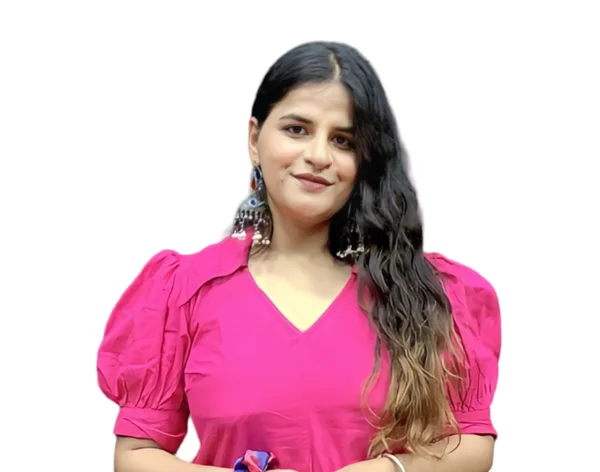
Pulkita Wadhwa
Mental Wellness Coach
USA Fellowship-Trained Support
Qualifications: Master’s in Psychology; Bachelor’s (Hons.) in Psychology; Psychoanalytic Fellowship – Washington-Baltimore, USA; Diplomas (NIMHANS & Child/Family Counselling)
Specializes in: Psychoanalytic, CBT, DBT; Stress, relationships, career, family dynamics
Best for: In-depth coaching, complex emotional patterns, and long-term personal transformation
Global Exposure: Advanced clinical training and academic exposure through her fellowship in the USA
Want to plan the ask, or what comes after it, with a coach?
Saying it out loud first can make the message easier to send. A coach can help you decide what to share with your manager, use the day well, and work out what needs to change once you're back. A coach who thinks you need licensed care can refer you to a licensed therapist.
Ventoutt's coaches are MA/PhD psychology professionals, minimum three years' experience, based in India. Wondering whether a coach in India knows how time off works at US jobs? Here's what coaching from India looks like for someone working in the US. Your employer isn't told that you use Ventoutt. If you ever want your data gone, here's how deletion works.
$35 single session with no subscription, 45–60 minutes, by chat or video. Deciding between one session and a monthly plan? This sets the two side by side. First 50 coaching texts free for eligible new users. Changing coach is free.


More questions about taking a mental health day?
Is a mental health day a sick day or a personal day?
That depends on your employer. Some sick-time policies cover mental as well as physical health, and some workplaces put all time off in one bank. Your handbook or HR will say which applies to you. For questions about what the law says where you live, ask your state's labor department.
Do you have to tell your boss why you're taking the day?
Your workplace's process decides what's needed; your handbook will say. Beyond that, how much you share is up to you. If a reason is asked for, a short true one works: "I'm not well today."
Is there a limit on mental health days?
Only the time off you have and your workplace's process. If you find yourself reaching for one again and again, the day isn't the problem. Look at what needs to change at work.
What if your manager says no to a mental health day?
Ask what would make it possible: a different day, or cover you arrange. If you're unwell, check how your handbook says call-outs work. If time off you've asked for properly keeps being refused, or you're treated worse after asking, HR is the next step, and work stress, or something unsafe? covers speaking up when you're worried about what happens next.
Where does the time-off research come from?
- Speth, F., Wendsche, J., & Wegge, J. (2023). We continue to recover through vacation! Meta-analysis of vacation effects on well-being and its fade-out. European Psychologist, 28(4), 274–287. https://doi.org/10.1027/1016-9040/a000518
- Grant, R. S., Buchanan, B., & Shockley, K. M. (2025). I need a vacation: A meta-analysis of vacation and employee well-being. Journal of Applied Psychology, 110(7), 887–905. https://doi.org/10.1037/apl0001262

Aditi Bajpai
Mental wellness coach at Ventoutt
Qualification: M.A. Clinical Psychology, India
Dedicated to bringing you authentic and helpful mental health content.
View Profile